
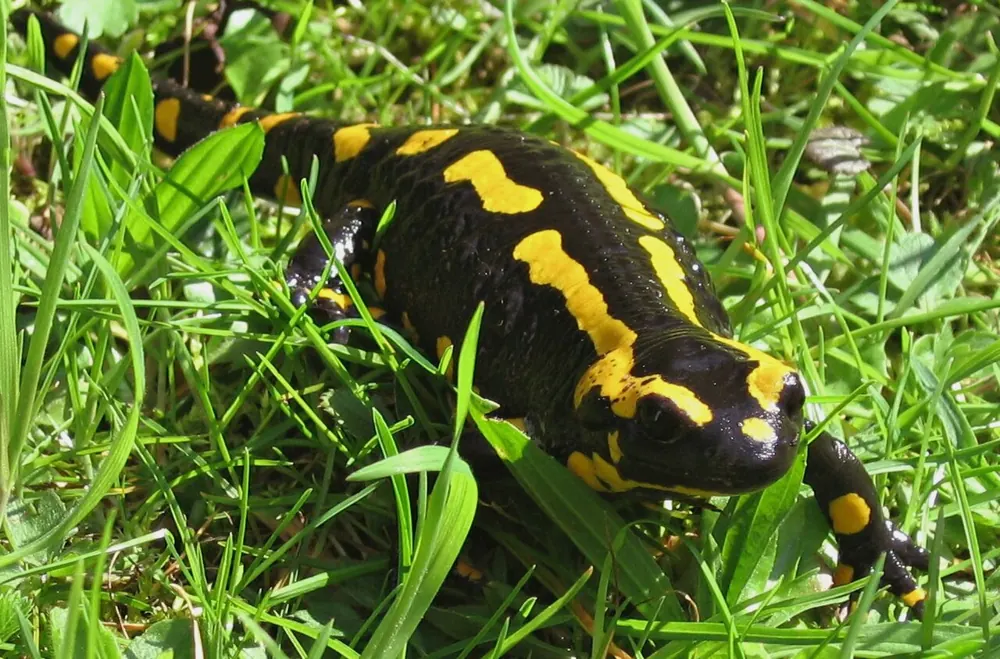
Fire salamander
Salamandra salamandra
Photo: Feuersalamander portrait · Michael Linnenbach · CC BY-SA 3.0 · Changes and credits
These guides provide general husbandry information and do not replace veterinary assessment. If your animal shows symptoms or its condition worsens, contact a veterinarian experienced with exotic animals.
- Warm zone
- Daytime air: ≤20 °C
- Cool zone
- Enclosure air: ≤20 °C
These notices cover the cited provisions, not every possible national or local rule. Check additional requirements with the competent authority.
Description
Salamandra salamandra is a European amphibian with a black body bearing yellow spots or bands that vary between individuals and subspecies. It mainly inhabits woodland, emerging in damp, dim conditions to search for invertebrates. Skin glands produce defensive secretions; females of S. s. terrestris normally deposit larvae in water.
Housing together
Salamandra salamandra can be kept singly or in a group with one adult male and females, with at least one retreat per animal. Multiple males can cause stress without visible fighting: monitor activity, weight and food access. Do not combine small juveniles and adults because of cannibalism risk; rear larvae separately from adults and other species’ tadpoles.
Enclosure and climate
For S. s. terrestris, provide leaf litter, damp and dry hides, draining substrate and a shallow water container with easy exits. Avoid standing water and overheating.
Active-season guidance for S. s. terrestris; climate and cycling depend on subspecies.
Setup
Prepare new water in a dedicated container and treat chlorine and chloramine before using it for dishes, substrate or misting, following product instructions.
Cool floor and hides
Spread the specified substrate and set cork and low hides close to the ground without burying entrances in litter. Keep both moist and less-moist retreats reachable and test leaving the shallow dish. Aquatic larvae belong in the separate tank described under breeding.
Testing and access
Connect specified heat sources to compatible thermostats and guard against contact. Secure probes according to device instructions; measure air at resting sites and heated surfaces separately with independent instruments. In housing with water, also check water temperature and quality: one zone’s thermostat does not control the others.
With the complete enclosure running, record day and night readings and compare them with the sheet. Test doors, cable openings and cleaning access, keeping vents clear. Change one variable at a time and recheck after each adjustment.
Lighting and UVB
Zone 1: shade or crepuscular activity; ecological UVI band 0–0.7.
One UVI peak is not verified for this entry. Adjusting the installation requires a target for the identified species and origin; the layout should provide screened areas and voluntary light access. A missing number does not establish that UVB is useless.
UVB is recommended at an intensity appropriate to the species, with the option to withdraw from the light. Evidence of its necessity varies between animals: assess exposure alongside diet and species identification.
UVA: the precise requirement is not established for this entry; no separate UVA source is prescribed. Evaluate illumination, retreats and life stage together.
Linear UVB tube with reflector, sized once species UVI is established; no single verified percentage for this entry.
For maintenance, a cycle of approximately 12 hours of light and 12 hours of darkness can serve as an initial reference. Use a timer to switch lights off at night, and keep retreats available so the animal can withdraw from light during the day. Adapt day length to species and origin, following the specific guidance for seasonal care and breeding.
Light in the animal’s daily life
Keep opaque moist retreats and prevent lighting from overheating the enclosure. Zone 1 is not a compulsory dose: the practical peak remains to be established.
An example layout in the enclosure
The sheet does not establish one minimum height. To explain mounting alone, imagine lighting supports 60 cm high: this illustrative height does not set minimum housing dimensions. Aggregated entries require species identification first.
In a wooden enclosure with internal lighting, imagine the tube 55 cm above the floor and the back or head at 25 cm. The geometric distance is therefore 30 cm. The branch or platform lies below animal height, according to body size. Place lighting over one side, with a route to fully screened retreats.
In a glass enclosure with a mesh roof, retain the same animal height and imagine the tube 5 cm above the mesh: distance becomes 40 cm. Mesh attenuates UV variably; ordinary glass roofs block UVB. Increasing the percentage alone is insufficient: measure beneath the mesh and adjust height, output or layout as needed.
These distances describe the example, not a safe clearance for every lamp. First establish a verified UVI target for the identified taxon. Also respect the minimum clearance specified for the model used. Recheck with furnishings, guards and mesh installed, including the highest reachable points and animal growth.
Choosing and checking lighting
First define the patch that should illuminate the whole body and the route to a screened retreat. For a broad patch, select a linear tube with reflector; consider a compact only if its useful patch covers the body and leaves an accessible gradient. Check model, output, reflector and mounting distance, then compare measured UVI with the species target. Label UVB percentage alone cannot determine distance and intensity.
The decisive check uses a UVI metre facing the source at animal height. Check the centre and edges of the exposed patch, the highest supports and retreats, which must allow withdrawal from UV. Repeat after moving equipment, changing lamps and plant growth. Without a metre, use the manufacturer’s instructions and measurements for the exact configuration, including safety clearances.
When UVB or UVA are absent
When keeping without UVB, D3 must be supplied through a complete diet or species-appropriate supplementation. Calcium alone does not replace D3. Check existing amounts in prepared diets and multivitamins before combining products; dosage also depends on diet and cannot be derived from lighting hours.
UVA has no dietary replacement. Maintain appropriate illumination and photoperiod without adding an intense source to compensate for unverified information: amphibian exposure must be evaluated by species and life stage.
Humidity and ventilation
For Salamandra salamandra keep soil beneath litter moist and retain retreats with differing moisture levels. Check beneath cork and hides: standing water should not collect there. Change dirty water in the shallow dish and remove contaminated substrate; misting walls does not replace these tasks.
Feeding
Salamandra salamandra: invertebrate predator with temperature-dependent metabolism. Earthworms and varied insects are preferable to boneless meat or routine rodents.
Recommended foods
The tiers describe dietary use: rotate foods within each tier rather than treating them as an absolute nutritional score.
| Food | Dietary role | Benefits and limits | Preparation |
|---|---|---|---|
| Earthworms from controlled cultures | Main choices | Soft prey with a generally more favourable mineral balance than unsupplemented crickets; particularly useful for amphibians. They are not a reason to eliminate all variety. | Rinse and cut only if required for mouth size. Avoid dyed fishing bait, cultures on contaminated manure and collection from treated soil. |
| Crickets and locusts | Main choices | Supply protein and encourage hunting; calcium is low relative to phosphorus, so preparation and supplementation are needed. | Use captive-bred insects and gut-load them as described below. Select suitably sized feeders, place the meal’s batch in a clean container and apply a thin calcium coating immediately before offering them. |
| Feeder roaches | Main choices | These feeders provide a useful second protein source for rotation, but do not constitute a complete diet or replace calcium supplementation. | Offer well-fed soft nymphs sized to the mouth; avoid excessively hard adults. |
| Waxworms, mealworms and superworms | Occasional | Fat-rich larvae concentrate energy and often contain little calcium: use as a small part of variety, not the sole food. | Replace part of the meal instead of adding them to a full ration. Avoid hard or oversized larvae for small animals. |
| Wild insects, fireflies and contaminated prey | Avoid / not a staple | May carry pesticides, parasites or toxins; a healthy appearance does not establish safety. | Use traceable feeder cultures; do not collect insects beside roads or treated gardens. |
Comparable nutritional values
Protein, fat, calcium and phosphorus are percentages of dry matter, excluding water; dry matter itself is a percentage of fresh weight. These are reference analytical values compiled in a clinical table, not guaranteed contents of your batch or a universal ranking. Age, rearing, feeding and supplementation change composition. Do not compare them directly with fresh-food percentages or already diluted prepared diets. Comparable numbers are not provided for other foods.
| Insect | Dry matter | Crude protein | Crude fat | Calcium / phosphorus | Ca:P |
|---|---|---|---|---|---|
| Adult house cricketAcheta domestica | 32% of fresh weight | 62.6% DM | 20.4% DM | 0.3 / 1% DM | 0.3:1 |
| Migratory locustLocusta migratoria | 31% of fresh weight | 67.5% DM | 14% DM | 0.1 / 0.7% DM | 0.14:1 |
| Mealworm larvaTenebrio molitor | 32.8% of fresh weight | 52.8% DM | 36.1% DM | 0.3 / 0.8% DM | 0.37:1 |
DM = dry matter. Ca:P describes calcium relative to phosphorus before supplementation: a protein-rich feeder may still be calcium-poor. Offered portions remain those for this species and life stage.
Meals by age and size
| Stage and size | Frequency | Amount per meal |
|---|---|---|
| Aquatic larvae, if present | Small larvae: daily; well-grown larvae: 2–3 times weekly, according to temperature | Cultured Daphnia and other small aquatic invertebrates for tiny larvae; then swallowable earthworm pieces. Offer a few bites at a time and siphon leftovers. |
| Terrestrial juveniles after metamorphosis | Every 1–2 days, small portions | Start with 1–2 small earthworms or a few soft mouth-sized insects; observe swallowing and abdomen. Replace large prey with smaller pieces. |
| Subadults and adults | Every 7–14 days for cool-kept adults; check consumption and weight | Start with one easily swallowed earthworm; add a second only if the first is eaten and body condition remains lean. Record worm size: two earthworms can have very different weights. |
Adjusting portions
To assess the portion, compare the amount and type of food eaten with growth and body condition. Weekly weighing of juveniles and monthly weighing of adults helps follow the trend. Adjust the ration gradually when growth or reserves require it; reduce it if body condition indicates excess weight or leftovers remain. Investigate unexpected weight loss or abnormal swelling rather than addressing it only with more or less food.
Preparing and offering meals
Prepare insects during the 24–48 hours before feeding: keep them in their culture container with a complete feeder diet and safe hydration. Check access to food and water and remove spoiled leftovers. Then select feeders of the specified size and prepare only the batch to be offered. This step, called gut-loading, improves prey quality; bran or potato alone do not correct deficiencies.
At feeding time the prey should be easy to swallow. As an initial guide, choose insects no wider than the space between the eyes, then adapt size to the mouth and the animal’s response. Offering them individually or in an escape-resistant dish lets you see actual intake and remove leftovers.
Use clean equipment and water treated for chlorine and chloramine for tongs, bowls and rinsing; avoid soap residue. Offer near the animal without making it swallow substrate.
Calcium and vitamins
Immediately before feeding, lightly coat low-calcium insects with phosphorus-free calcium: they should remain visible, without clumps. Common insects often have an unfavourable calcium:phosphorus balance; rotating them alone does not correct it.
Choose one supplementation programme: plain calcium for ordinary meals and a species-appropriate multivitamin at its labelled feeding intervals. Record the product and its existing D3 and vitamin A; do not add a second dose to meals using a combined product. With measured UVB, agree the oral D3 provision; product concentrations are not interchangeable.
For amphibians choose a product appropriate for vitamin A as well; beta-carotene alone should not be considered equivalent in every species. Therapeutic vitamin A doses require a veterinarian.
Daily care
First days
Keep retreats accessible and observe without opening them to look for the animal. Check climate readings from outside, offer scheduled food and record actual intake. Prepare the scales and container before weighing so the transfer stays brief; compare weight with earlier records rather than relying on appearance alone.
Cleaning
Keep animals and equipment away from kitchens and food areas, use tools dedicated to each enclosure and wash your hands with soap and running water after handling animals, food, tank water or furnishings. Quarantine new arrivals separately and agree the duration and checks with a veterinarian before introducing them to established animals.
Handling
Limit contact to necessary transfers and use moist powder-free gloves.
Checks
Record weight, appetite and behaviour; consult a veterinarian experienced with the species if changes persist. For laboured breathing or wounds, contact them promptly without waiting for symptoms to persist.
Breeding
Sex, maturity and readiness
Confirm subspecies and origin. This pathway concerns forms giving birth to aquatic larvae; some Iberian populations produce already metamorphosed young. Adult males have a more prominent cloaca; maturity and growth take several years.
Start a record for each breeding animal with identity, origin, documented age and previous weights. Compare the weight trend with growth and body condition; delay introductions for animals still growing rapidly, losing weight or recently acquired. Use stated ages as guidance alongside these checks. If sex cannot be identified reliably, obtain assessment by qualified personnel before pairing.
Preparation and seasonal cycle
Maintain a cool cycle consistent with origin and ventilated damp hides. Offer the female a shallow tray with a ramp she can enter and leave without swimming. Prepare separate larval tanks before the birth season.
Before encounters, prepare and test offspring enclosures and have first foods available. Check records for regular adult feeding and good body condition, then verify access from exposed areas to retreats. If the species protocol includes seasonal changes, adjust settings gradually and record the response. Record night-time air, surface and egg temperatures separately, noting where each is measured. Keep water available throughout preparation.
Courtship and mating
Mating takes place on land through spermatophore transfer. Observe without handling the pair and separate fighting males. Sperm storage permits birth without recent mating: keep the full introduction history.
Pregnancy and preparation for birth
The female releases live larvae into water, sometimes in multiple batches. Inspect the tray daily and transfer larvae with a small container, separating them from adults. Do not look for eggs to bury in vermiculite: initial development occurs inside the mother.
Larval birth and metamorphosis
Rear larvae in cool, oxygenated, clean water with cover and similarly sized individuals. Metamorphosis varies: as gills shrink, provide a ramp to very damp land. Terrestrial-birth forms require this second enclosure immediately.
First meals and juvenile care
For larvae offer Daphnia, small cultured aquatic larvae and appropriately sized earthworms, checking every individual. After metamorphosis use supplemented small insects and earthworms in ventilated damp housing; avoid deep pools because terrestrial juveniles can drown.
Observe each larva’s feeding, growth and developmental stage daily, avoiding unnecessary capture for weighing. Also check water quality, injuries and size differences: a feeding group does not establish that every larva eats. Separate injured individuals or those excluded from food, and adjust space and diet as they develop. For forms that become terrestrial, prepare gentle exits and shelters before the transition to land.
Female recovery
Keep the female in a cool, stable environment with accessible water and her usual foods. Monitor weight and appetite and keep checking the basin: further larvae may be born later. Wait for body condition to recover before new introductions.
Equipment and example diary
Prepare a birth tray with a ramp, covered larval tanks, water tests, thermometer, siphon and terrestrial housing for metamorphosis. Record each birth group, accepted food and transition to land; births may be spread over time.