
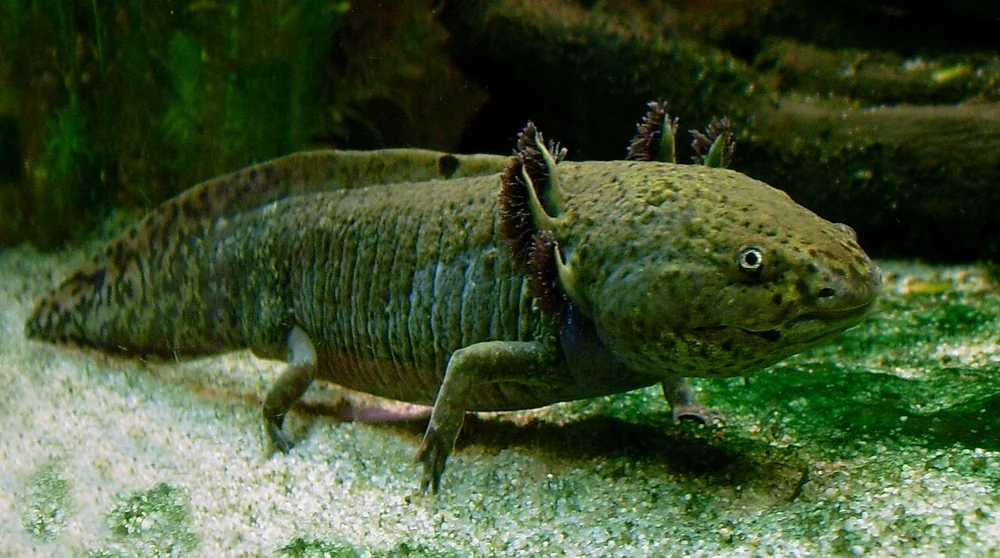
Axolotl
Ambystoma mexicanum
Photo: Axolotl ganz · LoKiLeCh · CC BY-SA 3.0 · Changes and credits
These guides provide general husbandry information and do not replace veterinary assessment. If your animal shows symptoms or its condition worsens, contact a veterinarian experienced with exotic animals.
These notices cover the cited provisions, not every possible national or local rule. Check additional requirements with the competent authority.
Description
Ambystoma mexicanum is an aquatic salamander native to Mexico’s Xochimilco lake system. Adults normally retain larval traits, including feathery external gills and a tail fin. It captures small aquatic animals by suction and is renowned for regeneration; pale captive forms differ from the dark mottled natural colour.
Housing together
Individual housing is prudent; size differences promote biting and predation.
Enclosure and climate
Keep the water cool and stable and use a filter that produces a gentle current. Monitor ammonia and nitrite; remove gravel and objects the axolotl could swallow.
Water temperature, no basking; severe stress is documented above 24 °C.
Setup
Set the tank on a support suitable for its filled weight and check joints for leaks. Prepare a siphon and separate containers for new and removed water.
Tank and surface access
Place hides with entrances facing open spaces, keeping water above routes clear. Position the filter where it can be reached without lifting retreats; if the return continuously moves the animal or bottom material, direct it towards a wall. Guard the intake without obstructing flow and remove swallowable pieces that can detach from furnishings.
Tank testing
Before arrival, complete biological filter cycling and check ammonia, nitrite, nitrate and temperature. Treat chlorine and chloramine in new water; clarity and absence of odour do not replace tests. Test equipment with the tank at its operating level.
Lighting and UVB
Ferguson zone not assigned with sufficient precision to this taxon.
This animal lives submerged and does not use a terrestrial basking site. Lighting should leave calm dark areas; terrestrial values do not transfer directly to its tank.
UVB: not established as indispensable for routine axolotl keeping. Prioritise a moderate light cycle with dark hides; aquatic UV requires a separate assessment.
UVA: the precise requirement is not established for this entry; no separate UVA source is prescribed. Evaluate illumination, retreats and life stage together.
Diffuse visible light, without an automatic UVB percentage prescribed for the submerged animal.
For maintenance, a cycle of approximately 12 hours of light and 12 hours of darkness can serve as an initial reference. Use a timer to switch lights off at night, and keep retreats available so the animal can withdraw from light during the day. Adapt day length to species and origin, following the specific guidance for seasonal care and breeding.
Light in the animal’s daily life
Keep visible light moderate and provide dark underwater retreats. Do not apply a terrestrial chart to the tank floor: water, depth, lid and vegetation change exposure. A UVB target for this configuration is not established.
When UVB or UVA are absent
Do not compensate for absent UV with stronger lighting or automatic extra D3. Maintain the complete diet described under feeding and a normal day/night cycle; suspected deficiencies require nutritional assessment.
UVA has no dietary replacement. Maintain appropriate illumination and photoperiod without adding an intense source to compensate for unverified information: amphibian exposure must be evaluated by species and life stage.
Humidity and ventilation
Not applicable: aquatic species.
Feeding
Ambystoma mexicanum remains aquatic: for larger juveniles and adults use mainly earthworms and an appropriate complete diet. Food is swallowed whole; no swallowable gravel in the feeding area.
Recommended foods
The tiers describe dietary use: rotate foods within each tier rather than treating them as an absolute nutritional score.
| Food | Dietary role | Benefits and limits | Preparation |
|---|---|---|---|
| Earthworms from controlled cultures | Main choices | Soft prey with a generally more favourable mineral balance than unsupplemented crickets; particularly useful for amphibians. They are not a reason to eliminate all variety. | Rinse and cut only if required for mouth size. Avoid dyed fishing bait, cultures on contaminated manure and collection from treated soil. |
| Complete sinking axolotl pellets | For rotation | Provide a more repeatable composition than larvae alone; verify they are complete and suited to carnivorous amphibians rather than herbivorous fish food. | Choose soft pellets fitting the mouth; offer individually and immediately remove those breaking apart. |
| Cultured brine-shrimp nauplii and Daphnia | Main choices | Moving microprey for first-feeding larvae; not a practical portion for large adults. | Rinse nauplii free of saltwater before use; remove dead prey and maintain clean cultures. |
| Bloodworms | Occasional | Useful for variety and transition to larger foods, but do not choose these alone as the permanent adult diet. | Thaw small portions and siphon remains; do not confuse bloodworms with Tubifex. |
| Live feeder fish, beef heart and meat alone | Avoid / not a staple | Live fish may introduce disease; muscle and heart do not provide the mineral balance of a complete diet. | Prefer controlled-culture earthworms and suitable pellets. |
Meals by age and size
| Stage and size | Frequency | Amount per meal |
|---|---|---|
| First larvae, after yolk-sac absorption | Daily in 1–2 small feeds | Place live microprey close enough to catch; observe a filled gut and remove leftovers. Adjust density using capture success rather than the number of food cubes. |
| Larvae above about 3 cm and juveniles up to about 15 cm | Daily | Introduce earthworm pieces and small pellets: 1–2 bites at a time, continuing only while promptly swallowed. Record intake over about 5 minutes. |
| Subadults and adults over about 15 cm, with slowed growth | Every 2–3 days as a starting point | Start with one medium earthworm or the labelled pellet portion for its size; cut a large worm. The abdomen should remain roughly head-width without becoming swollen; females and males may differ. |
Adjusting portions
To assess the portion, compare the amount and type of food eaten with growth and body condition. Weekly weighing of juveniles and monthly weighing of adults helps follow the trend. Adjust the ration gradually when growth or reserves require it; reduce it if body condition indicates excess weight or leftovers remain. Investigate unexpected weight loss or abnormal swelling rather than addressing it only with more or less food.
Preparing and offering meals
Rinse prey and offer with blunt tongs or in a dish on the bottom; remove leftovers immediately. Food must not compromise ammonia and nitrite, which should remain undetectable.
Calcium and vitamins
Do not disperse calcium or vitamins into water or dust already complete pellets. Earthworms and formulated pellets reduce the need for improvised corrections; a prolonged alternative diet needs nutritional assessment.
Daily care
First days
Keep retreats accessible and observe without opening them to look for the animal. Check climate readings from outside, offer scheduled food and record actual intake. Prepare the scales and container before weighing so the transfer stays brief; compare weight with earlier records rather than relying on appearance alone.
Cleaning
Keep animals and equipment away from kitchens and food areas, use tools dedicated to each enclosure and wash your hands with soap and running water after handling animals, food, tank water or furnishings. Quarantine new arrivals separately and agree the duration and checks with a veterinarian before introducing them to established animals.
Handling
Use a water-filled container for transfers. Avoid nets, direct restraint and routine handling.
Checks
Record weight, appetite and behaviour; consult a veterinarian experienced with the species if changes persist. For laboured breathing or wounds, contact them promptly without waiting for symptoms to persist.
Breeding
Sex, maturity and readiness
Sex adults only: males have a more prominent cloaca and females a broader body. Maturity can occur around one year; check completed growth and condition rather than using a birthday alone.
Start a record for each breeding animal with identity, origin, documented age and previous weights. Compare the weight trend with growth and body condition; delay introductions for animals still growing rapidly, losing weight or recently acquired. Use stated ages as guidance alongside these checks. If sex cannot be identified reliably, obtain assessment by qualified personnel before pairing.
Preparation and seasonal cycle
Keep water cool and stable, approximately 15–18 °C. Gradually increasing day length can accompany the breeding season; a temperature shock is unnecessary. Prepare separate rearing tanks and first-food cultures beforehand.
Before encounters, prepare and test offspring enclosures and have first foods available. Check records for regular adult feeding and good body condition, then verify access from exposed areas to retreats. If the species protocol includes seasonal changes, adjust settings gradually and record the response. Record night-time air, surface and egg temperatures separately, noting where each is measured. Keep water available throughout preparation.
Courtship and mating
The male leads the female towards spermatophores deposited on the bottom; she picks them up with her cloaca. Provide stable, textured but nonabrasive supports. After the interaction, separate the male and record your observations.
Spawning and egg collection
The female attaches individual eggs to plants and supports, often over one or two days. Move the support to a prepared tank without breaking the jelly capsule; keep eggs and larvae away from adults and identify each spawning.
Aquatic development and hatching
Hatching normally takes weeks rather than following a guaranteed daily deadline. Keep eggs spaced and oxygenated without direct jets; record temperature and visible development. Do not manually open delayed capsules or heat them to accelerate development.
Use water treated for chlorine and chloramine at the same temperature as the original container. Guard intakes and keep movement gentle. Check eggs and water daily, remove dead material without breaking healthy eggs, siphon leftovers and faeces, test ammonia and nitrite and change water with prepared water as needed.
First meals and juvenile care
Once yolk is absorbed and food searching begins, offer live Artemia nauplii daily, rinsed free of saltwater and shells. Check that every larva feeds and promptly remove leftovers. Sort by size and separate individuals that bite others.
Observe each larva’s feeding, growth and developmental stage daily, avoiding unnecessary capture for weighing. Also check water quality, injuries and size differences: a feeding group does not establish that every larva eats. Separate injured individuals or those excluded from food, and adjust space and diet as they develop. For forms that become terrestrial, prepare gentle exits and shelters before the transition to land.
Female recovery
Keep the female apart from the male with stable water and her usual diet. Monitor weight, appetite and recovery for months before considering another introduction; another rapid spawning does not prove recovery.
Equipment and example diary
Prepare rearing tanks, covers, a mature sponge filter or containers for regular water changes, water tests, a narrow siphon, thermometer and productive first-food cultures. The number of offspring raised must match the actual capacity to feed them and maintain clean water.
A consistent diary using actual dates helps follow reproduction in Ambystoma mexicanum. Start with adult identity, weight and condition, then record observed encounters, laying or birth and development conditions. After emergence record the first meal actually accepted and each youngster’s growth while continuing to follow female recovery. Over time these records help identify your lineage’s pattern without turning approximate durations into deadlines.